Speaker & Workshop Leader at the Second Social Media Forum – Kuwait
I had the honor of being invited as a speaker at the Second Social Media Forum in Kuwait, where I shared insights on social media and search engine optimization (SEO). In addition to my presentation, I conducted an intensive two-day workshop on how to become a social media marketer, equipping attendees with essential skills and strategies for success in the digital landscape.
The event took place at the Radisson Blu Hotel in Kuwait, running from 9:00 AM to 5:00 PM, and brought together professionals, marketers, and industry leaders to explore the evolving role of social media in business and marketing.
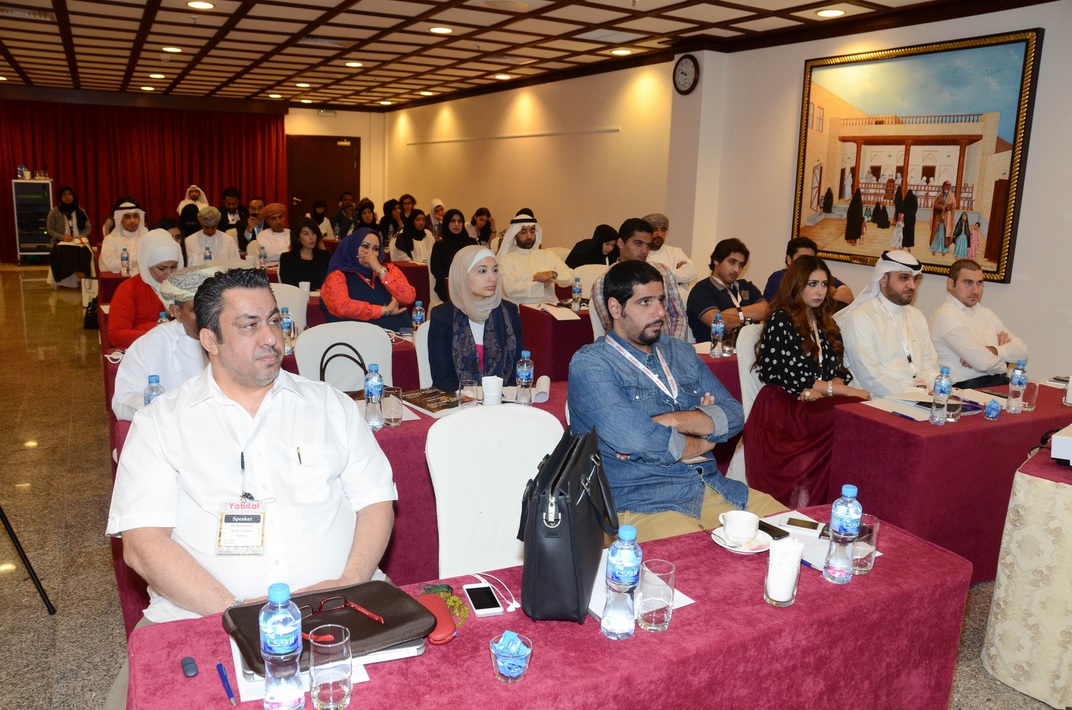
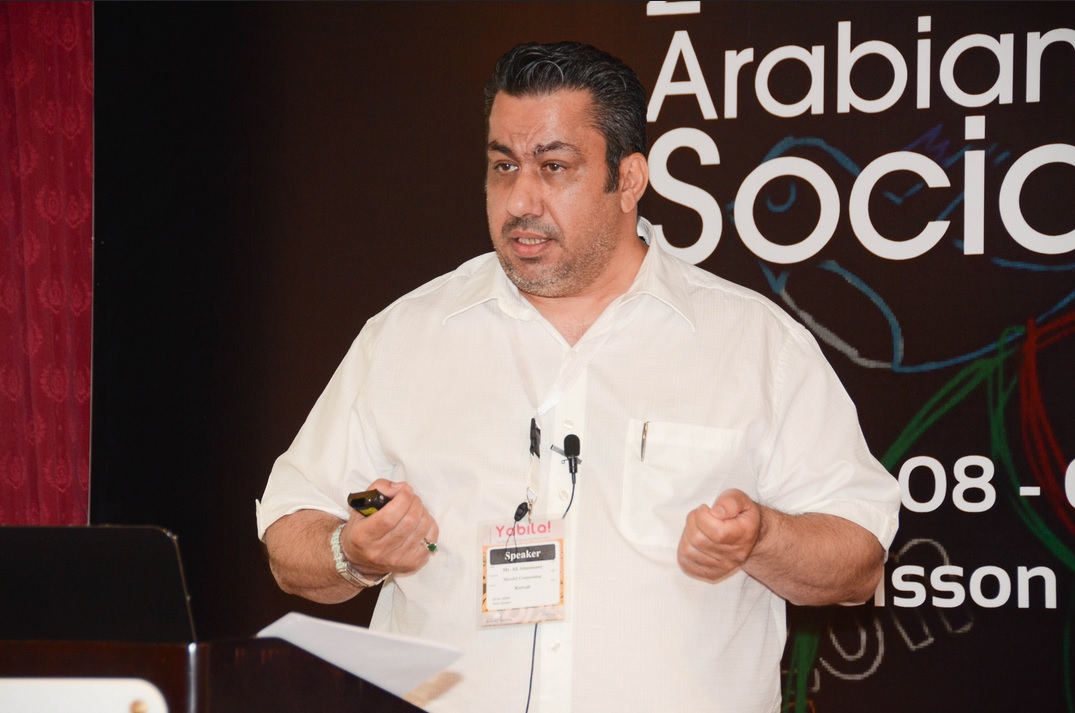
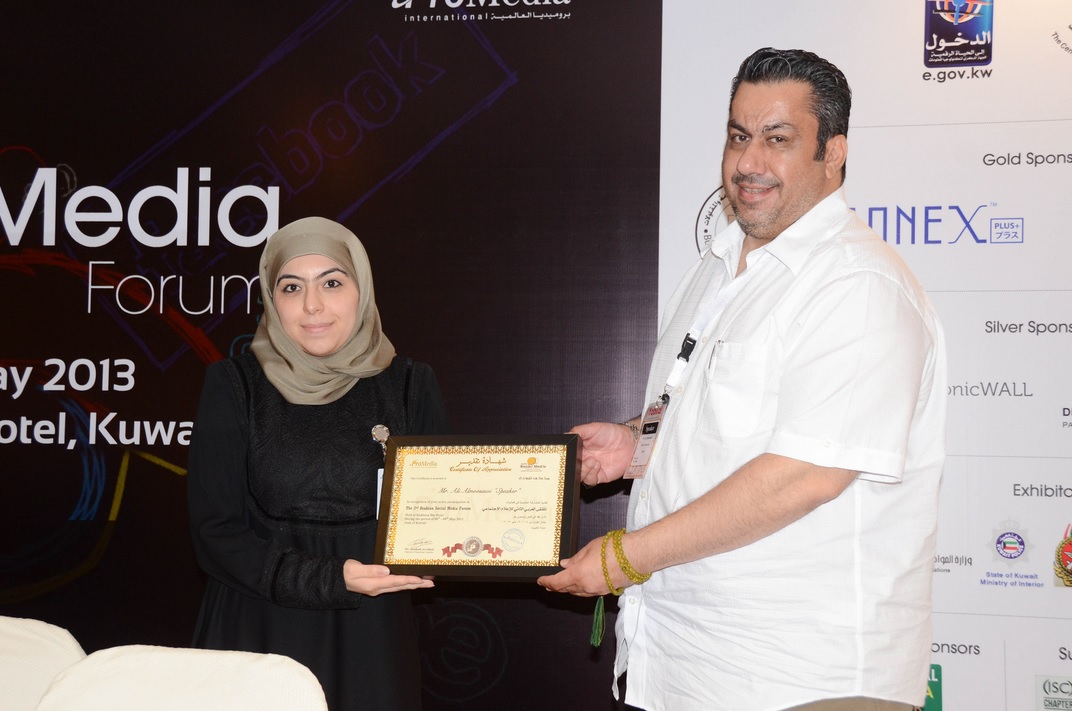
What “how to become a social media marketer” meant in 2013
Two days, nine to five, and an audience that mostly arrived expecting to be taught which buttons to press. That expectation was the first thing the workshop had to dismantle. In 2013 there was no established job description for a social media marketer in Kuwait — people were being handed the company account because they were young, or because they were already the one answering the phone, and nobody had defined what success looked like. Half the value of the two days was simply giving the role a shape: what it owns, what it decides, what it escalates and what it should never be asked to do alone.
The other half was craft. Writing for a feed rather than for a brochure. Building a content calendar you can actually sustain rather than one that collapses in week three. Handling a complaint in public without either deleting it or arguing with it. Reading the numbers well enough to tell a manager honestly whether something worked. None of that was taught anywhere in Kuwait at the time, which is precisely why the room filled.
The part of that curriculum that expired
Most of the platform-specific material is now historical. Posting-time optimisation mattered when feeds were chronological and it stopped mattering when they became ranked. Hashtag strategy was a genuine growth lever and is now close to decoration. Organic reach was something you could plan a campaign around; today it is something you occasionally get lucky with. Anyone still teaching the 2013 tactics as current is selling nostalgia.
The measurement chapter aged badly too. We spent time on follower growth and engagement rate because those were the numbers the platforms surfaced. They are still the numbers most dashboards lead with, and they are still mostly noise. A number belongs in a report only if a plausible answer to it would change what the business does next week.
The part that did not
Everything structural survived. Decide who owns the account before you open it. Agree in advance what the business will and will not say publicly. Write in the language your customer actually uses, which in Kuwait usually means Arabic first and English second, not the reverse. Answer quickly, in full, and in public where the complaint was made. Keep a record of what you published and what happened afterwards, because without it you are guessing forever.
Those are not social media lessons. They are operations lessons that happened to be taught through a social media lens, which is why they transferred intact into e-commerce, then into search, and now into AI. A business that got those five things right in 2013 has had an easier decade than one that bought a bigger camera.
What the same two-day course would cover in 2026
Day one would barely mention platforms. It would cover how a business is represented across the surfaces it does not control: search results, AI assistants, maps listings, marketplace pages, review sites. The practical exercise would be asking three different assistants what your company does and comparing the answers with what you believe you are telling the market. The gap is usually uncomfortable, and closing it is now higher-value work than any posting schedule.
Day two would be about the machinery: structuring a page so a person and a model both get a clean answer out of it, writing questions and answers that are actually true, keeping Arabic and English as separate indexable properties rather than one page with a toggle, and using automation for the repetitive middle of a process instead of bolting a chatbot onto the front of a broken one. The difference between the three optimisation disciplines that now matter is set out in the guide to SEO, AEO and GEO for Kuwait.
Why I taught the SEO half first
The forum talk paired social media with search engine optimisation, and that pairing was deliberate rather than convenient. Social media borrows attention; search captures intent. A business that only rents attention has to keep paying for it, while a business that ranks for what its customers are actually trying to do keeps earning enquiries when the campaign stops. That argument was unpopular in 2013 because social was the exciting thing in the room. It has aged well.
The mechanics have moved on — Google’s own SEO starter guide looks nothing like what I was teaching then, and the assistants have added an entirely new surface on top — but the underlying trade between rented attention and owned visibility is unchanged. It is still the first thing I explain on the SEO consulting page, thirteen years later.
The question that came up every single time
Do we hire someone or do we give it to an agency? It was asked in every session in 2013 and it is still asked in every meeting now, with “AI” swapped in for “social media”. The answer has not changed either, and it is not the one either side wants to hear: you outsource execution, never ownership. An agency can produce the work, run the ads and manage the calendar. It cannot decide what the business is willing to promise, what it will not say in public, or how much risk it will accept — and every disaster I have been called in to clean up started with a company outsourcing exactly those decisions.
The workable arrangement is one accountable person inside the business who understands the discipline well enough to brief, judge and reject work, with external hands doing the volume. That was the honest answer for social media in 2013 and it is the honest answer for AI now, which is more or less the whole argument behind the Fractional CTO model: senior judgement stays in-house, capacity comes from outside.
Where this sits in the wider story
This forum was one of several events in that period — the larger Social Media Summit covers what the whole 2013 moment signalled for Kuwait and what has changed since, and the Instagram marketing workshops went deeper on running a single platform properly. The practical, technical end of the same work now lives in pieces like optimising WordPress for Kuwaiti audiences.
Frequently asked questions
Do you still speak at conferences and events?
Yes — on AI adoption, digital products and search visibility, in Arabic or English. Tell me the audience and the theme and I will tell you honestly whether I am the right speaker for it.
Do you run training or workshops for teams?
Yes, built around the team’s actual tools and level rather than generic slides. These work best when the group has a real project in front of them, because the material can be applied the same week.
What do you work on now?
AI consulting and automation, Fractional CTO engagements, digital product and web development, and search and AI visibility, for businesses in Kuwait and across the GCC.