Pioneering Social Media Marketing in Kuwait
While social media marketing began gaining global traction in 2010, Kuwait was relatively late in adopting this innovative approach for marketing and advertising. By 2012, companies, government institutions, and marketing professionals started recognizing its potential, sparking a growing interest among businesses, media students, and industry professionals.
With a background in sales and marketing since 1983 and extensive experience in the web industry since 2002, I conducted in-depth research and collaborated with experts to master the latest social media marketing techniques. Through hands-on practice and continuous learning, I refined my expertise in this field. Once I achieved a high level of proficiency, I took the initiative to offer classes and workshops, sharing my knowledge and training others in effective social media marketing strategies.
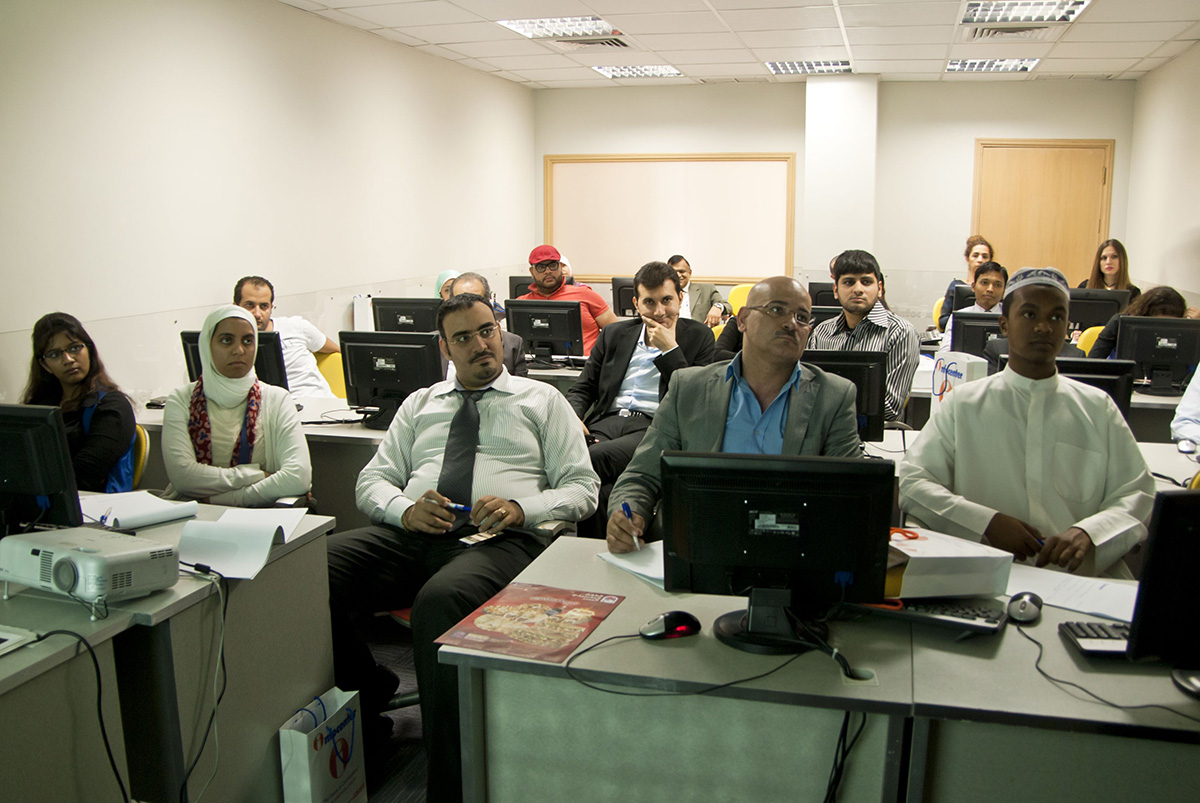

How social media marketing actually arrived in Kuwait
It did not arrive through marketing departments. It arrived through customers. By 2011 and 2012 people in Kuwait were already living on these platforms, and businesses followed because their audience had gone somewhere they were not. That order of events explains almost everything that went wrong in the years afterwards: companies adopted the channel reactively, without deciding what it was for, and then tried to retrofit a strategy onto an account someone had already been running for a year.
The second route in was the small trader. Long before large Kuwaiti companies took it seriously, individuals were selling perfume, cakes, clothes and electronics directly through their accounts, handling orders in direct messages and payment on delivery. They had no branding, no budget and no strategy document, and they were out-executing established retailers on responsiveness alone. That was the clearest signal available that the channel had become commercial infrastructure rather than a marketing experiment.
Why the training gap opened
By 2012 there was demand for the skill and almost no credible supply of it in Kuwait. Universities were not teaching it because the field was younger than the curriculum cycle. Agencies were learning on client budgets. The available international material assumed markets that behaved nothing like this one — different platforms, different languages, different attitudes to what a business can say in public and what happens when a complaint goes viral in a small country where everyone is two connections apart.
That last point is the one outsiders consistently underestimate. Kuwait is small enough that reputation moves through it fast, and Arabic-language conversation dominates in ways that global playbooks do not account for. A tactic that is merely ineffective elsewhere can be actively damaging here. Local training had to exist because imported training was, in places, wrong.
What I had to learn the hard way
Coming from sales and marketing, and then from more than a decade of building for the web, I assumed the transferable part would be the marketing. It was not. The transferable part was the systems thinking — knowing that a channel without an owner, a process and a record will fail regardless of how good the content is. The genuinely new material was cultural: pace, tone, and the fact that the audience now replied.
The other lesson was about how quickly expertise decays in a fast-moving field. Almost everything platform-specific I knew in 2013 was obsolete within four years. What kept its value was the layer underneath — how customers decide, how businesses actually operate, and how to tell the difference between a change that matters and a feature announcement. Anyone building a career on tool knowledge alone has to rebuild it every few years. Global adoption data from sources such as DataReportal and the ITU makes the pace of that turnover fairly obvious in hindsight.
What a sales background contributed
Coming into this from sales rather than from design changed what I paid attention to. Someone trained in sales is used to being told no, to hearing objections out loud, and to the idea that a conversation exists to reach a decision. Social media, when it finally arrived, was the first marketing channel that behaved like a sales floor: the customer answered back, immediately and in public, and the objection was visible to everyone else considering the same purchase.
Marketers found that uncomfortable and salespeople found it familiar. It is also why the accounts that performed best in Kuwait were rarely the most polished ones — they were the ones run by someone who had actually sold something and knew what a hesitant buyer sounds like. That instinct has not been automated away. It is now the difference between an AI assistant that resolves a customer’s real worry and one that answers the question they literally typed.
The same pattern, repeating with AI
What is happening in Kuwait with artificial intelligence right now is recognisably the same sequence. Individuals adopted it first and are already using it daily. Businesses are adopting reactively, usually by buying a tool before deciding what problem it solves. There is loud demand for training and very little of it grounded in how organisations here actually work. And, as in 2012, most of the confident advice in circulation is imported and only partially applicable.
The mistakes rhyme too. Appointing the most junior available person to own it. Measuring activity instead of outcomes. Treating it as a marketing initiative when it is an operations one. Buying a layer that sits on top of a broken process and expecting the process to improve. I set out what a more sensible sequence looks like in the piece on using AI in operations rather than in chatbots, and what the shift is doing to Kuwait’s digital economy more broadly in Beyond the Landing Page.
What being early is actually worth
Being early to social media marketing in Kuwait was not valuable because of the platforms. It was valuable because it forced a habit: watching what customers do before the industry has a name for it, and being willing to learn something properly rather than adding it to a list of services. The businesses I worked with in that period who adopted the same habit are, without exception, the ones still doing well.
That habit is the whole of the job now. As an AI consultant in Kuwait and a Fractional CTO, most of the value I add is not knowing a tool — it is being able to say honestly which changes are structural and which are noise, and helping a business reorganise around the first while ignoring the second. The longer version of that argument, told through the 2013 events themselves, is in the Social Media Summit retrospective and the Second Social Media Forum.
Frequently asked questions
Do you still speak at conferences and events?
Yes — on AI adoption, digital products and search visibility, in Arabic or English. Tell me the audience and the theme and I will tell you honestly whether I am the right speaker for it.
Do you run training or workshops for teams?
Yes, built around the team’s actual tools and level rather than generic slides. These work best when the group has a real project in front of them, because the material can be applied the same week.
What do you work on now?
AI consulting and automation, Fractional CTO engagements, digital product and web development, and search and AI visibility, for businesses in Kuwait and across the GCC.